Sorry, once again for not posting more--it's not that there isn't news, in fact I'm overwhelmed with things we should be thinking and talking about.
When I made my post about the snow, I meant to do a follow up delving into the issue it opened up. Are all people entitled to the same level of government funded infrastructure, schools, roads, snow plowing, transit etc... no matter where they choose to live--or is it reasonable for a city to limit services and use prudent cost benefit judgments to focus money on places where it would be most productive? Should it charge according to cost? Believe it or not, in places like Hong Kong and Singapore, transit either breaks even, or is operated by a company with real estate interests along the line.
Infrastructure, is the great unspoken entitlement program, so embedded in our culture few ever think about it.
Detroit, never ever thought about these things. All people were entitled to live anywhere they pleased regardless of cost and as the city shrank, tax dollars by default flowed towards the areas of greatest "need". The final result, was a regional population spreading out and shrinking at the same time. Detroit's land area today could hold all of Boston + all of San Francisco + all of Manhattan and a nice chunk of some other city and still have room.
Boston Population 620,535 ('08 estimate) Land Area 48.43 sq mi
San Francisco Population 808,976 Land Area 46.7 sq mi
Manhattan Population 1,634,795 Land Area 33.77 sq mi (area includes bulk of NY regions good jobs)
Detroit Population 912,062 (estimated to now not be much over 800,000) Land Area 138.8 sq mi
Finally, the city and entire state of Michigan are beyond broke and beyond temporary bailouts or fixes. The subject is on the table in a big way.
"Bing's (Detroit mayor) staff is using its own data and a survey released last weekend by Data Driven Detroit. The block-by-block study of the 139 square-mile city showed that roughly one in three parcels are vacant lots or abandoned homes. The mayor's staff didn't elaborate on Bing's comments to WJR beyond a statement saying, "the mayor will utilize data from several sources including city departments, Data Driven Detroit, as well resident input, to prepare a viable land use plan."
Steven Ogden, executive director of Next Detroit Neighborhood Initiative, is using the group's data to come up with a plan for which neighborhoods his nonprofit should target in the next several years with time and money. He submitted a proposal to the Bing administration within the past several days on what areas he wants to partner with the city to target."
I don't have time or details on this. It's pretty clear using force to physically remove people from their homes and neighborhoods is wrong and not likely to be possible on a large scale. (even though the city has done this over and over in the past) Equally clear is that one way or another some type of triage in terms of providing city services will likely be made either now or in the future. Already, Detroit's utilities are making these choices and cutting more and more blocks off from power and gas.
An extreme example of issues many cities in the former rust belt are facing.
Related articles.
http://www.rethinkdetroit.org/2010/01/30/how-kresge-plans-to-reconfigure-detroit/
http://www.rethinkdetroit.org/2010/01/24/jane-jacobs-on-detroit-low-density-failure/
Showing posts with label Shrinking Cities. Show all posts
Showing posts with label Shrinking Cities. Show all posts
Saturday, March 06, 2010


Saturday, October 14, 2006
Shrinking Cities
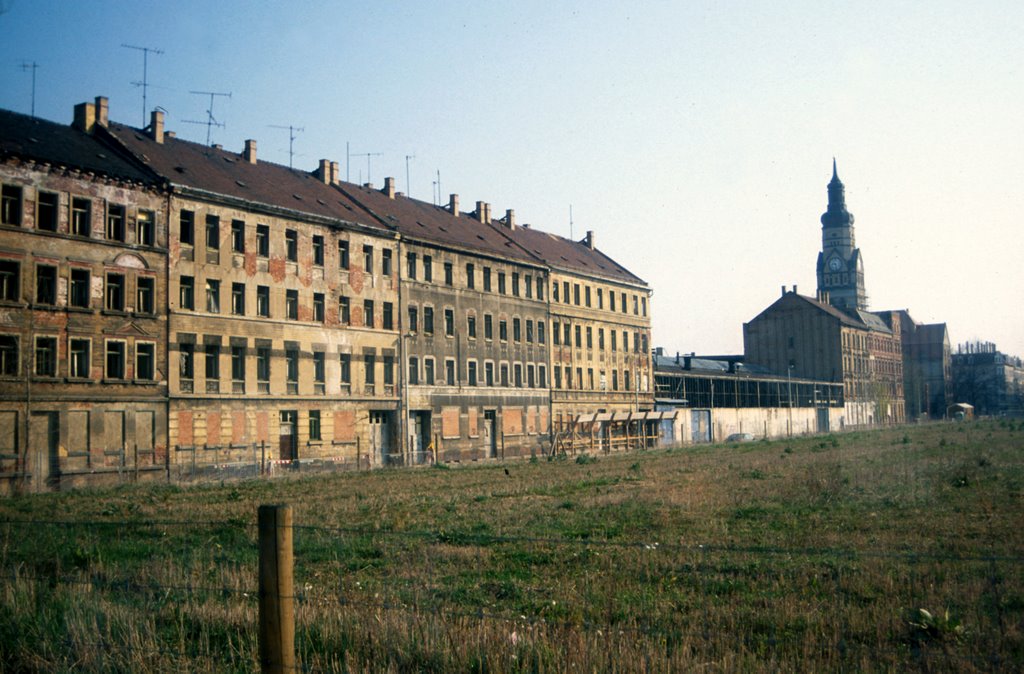 Leipzig
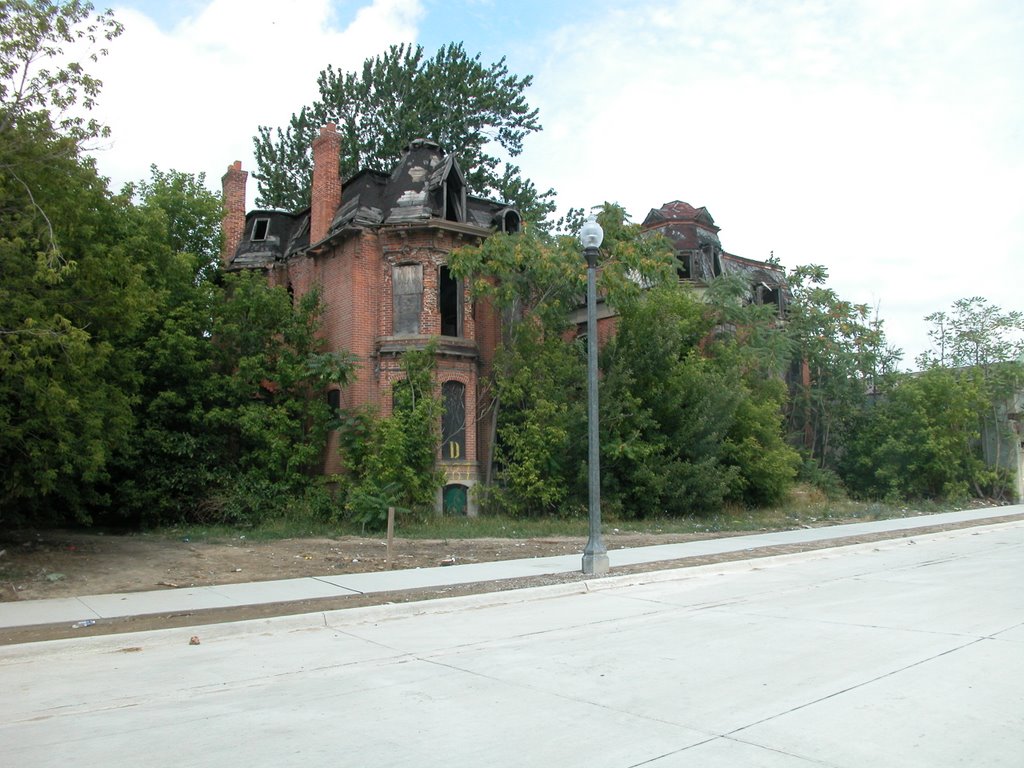 Detroit
 Detroit
I have to admit to just becoming aware of this facinating project called shrinking cities.
The project was started in Germany and I think that the first lines of the web intro imply that all cities are shrinking-- which is not close to being true and even the website has to slip that in.
(6.1 billion people currently live on the earth, 3 billion of them in cities. By 2030, the population of the world will have increased by 2 billion (+33%). This increase will be stem almost exclusively from the growth in urban population. Every day, 190,000 new city-dwellers are added all over the world, 2 in every second. In the year 2030, 4.9 billion people will live in cities)
The shrinking city is however an important area for study.
Intro from the Website:
The Project ///
Shrinking Cities, a three-year initiative project of Germany's Federal Cultural Foundation, seeks to expand Germany's city-planning debate - until now concentrated on questions of demolishing surplus apartments and improving residential quarters - to address new questions and perspectives. The project also places developments in eastern Germany in an international context, involving various artistic, design, and research disciplines in the search for strategies for action. The emphases of the research and exhibition project, Shrinking Cities, are, first, an international study of processes of shrinking (first project phase) and, second, the development of strategies for action for eastern Germany (second project phase).International Study /// Since 2002, four local interdisciplinary teams have been commissioned to study and document urban shrinking processes in the urban regions of Detroit (USA), Manchester/Liverpool (Britain), Ivanovo (Russia), and Halle/Leipzig (Germany). Each site stands as an example of a specific form of shrinking: In Detroit, the issue is the consequences of suburbanization; in Manchester/Liverpool, of deindustralization; in Ivanavo, of postsocialism; and in the greater Halle/Leipzig region, several of these factors are compounded. People from various disciplines, including urban geographers, cultural experts, architects, journalists, and artists, take part in the work.
The project has also developed a touring exhibition.
Subscribe to:
Posts (Atom)

 Posts
Posts


