Thursday, October 12, 2006

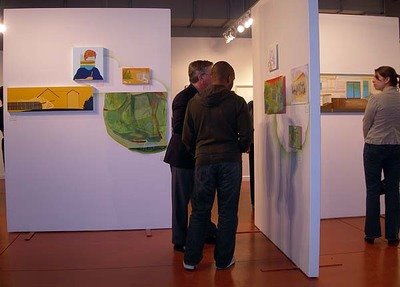
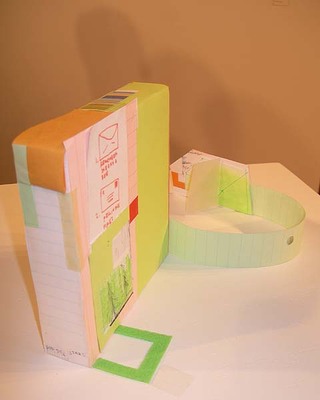
Adam Grossi & Warren Craghead in Virginia

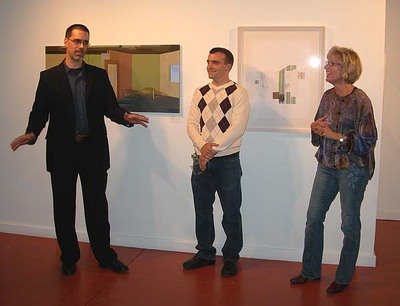
Warren Craghead and Adam Grossi
Adam Grossi Warren Craghead

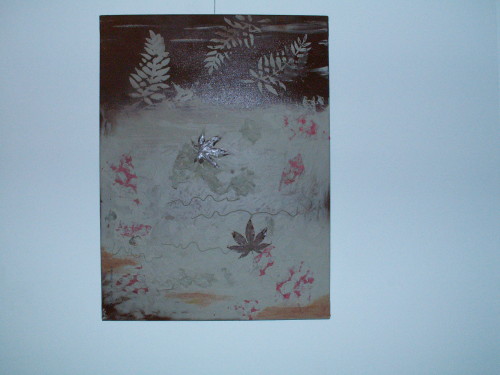
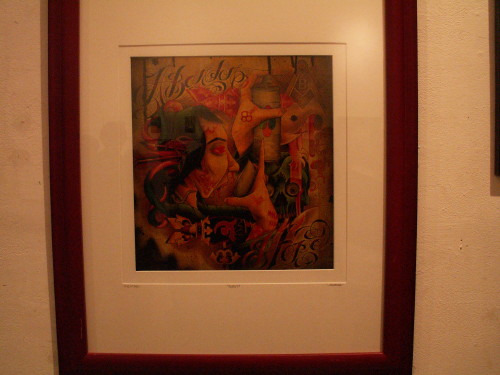
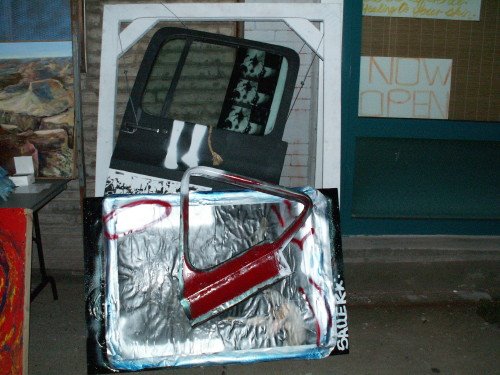
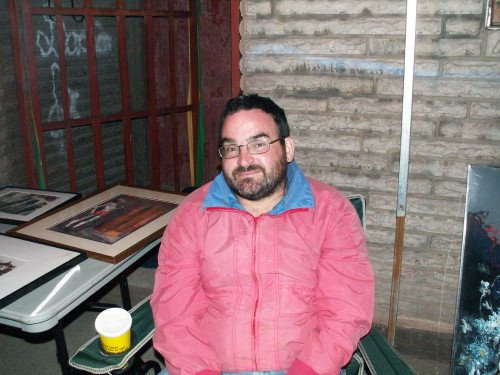
The artist/blogger, JT Kirkland, posted these really nice shots from Adam Grossi's opening in Reston Virginia. A really hope that he doesn't mind me copping them off his blog. Adam, lives in Pittsburgh and has shown in my gallery, so I have seen a lot of this work in person. Warren Craighead, is an artist who I think a lot of people may know from his visually exiting blog.

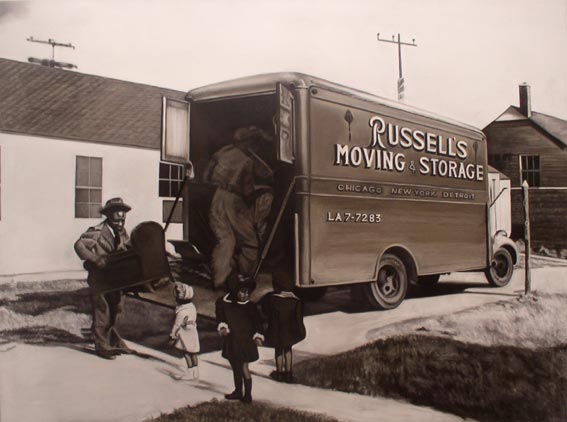
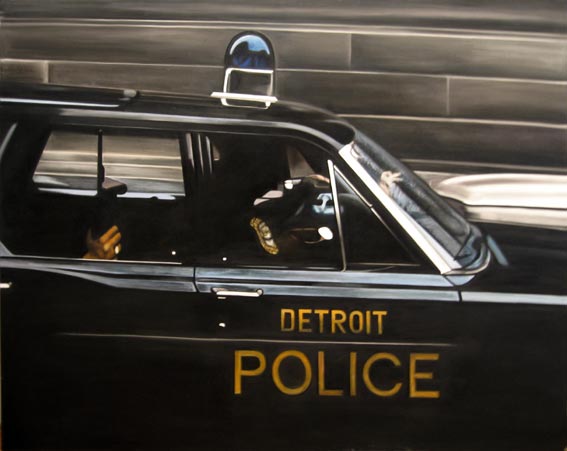
Michele Zalopany at Esso


This is a show( with a nice review here ) in NY, that just ended by an artist originally from Detroit. I came across the show through James Wagner's post and while I did not see the show and have never been to Detroit ; I was very moved by this work. The artist is tapping into such a rich river of memory and identity, that gives the images a lot of power. These images are loaded.

From the gallery press release:

Her paintings' photographic realism use a fictitious model, closer to an excuse to raise a question rather than make a statement, although many of the places, people and things are, or were, real. In 1943 it is believed that a confrontation on the Belle Isle Bridge was the spark to the ensuing riots. Zalopany's beautiful rendering of the empty Belle Isle Bridge paradoxically describes the scene of social malaise and the inability to mitigate Detroit's enormous racial chasm.
Zalopany's larger-than-life "Line Up" comprised of three panels at a total of 7'4" x 13 ft is a meditation on profiling in 1943. The six subjects, three males and three females, are posed in a police line up, dressed as though they were going to church, stare ambivalently into the camera, hence, at the viewer, asking the question 'why?' The viewer is in front of a contradiction, a painting that is not just a painting leaves open every interpretation. The painter obviously wasn't sitting in front of six subjects in a police line up. Maybe she painted using models in vintage clothes, in order to balance the unpleasantness of the real image she pushed herself to compose another antithetical one. The presence or absence maybe doesn't means much, what matters is her ability to make each of her paintings a serious questions. Technically, each picture is born pastel stroke by pastel stroke - applied with great skill and experience as well as the necessity that brings the artist to create new forms for her language and to organize the invented forms in relationships, into image-making.

Wednesday, October 11, 2006

Postcards From The Edge


You have about a month to contribute a piece to one of the best benefit events out there-- The Deadline is November 10th. Artist's get hit up a lot, but this is truely a wonderfully designed event for one of the best causes out there.

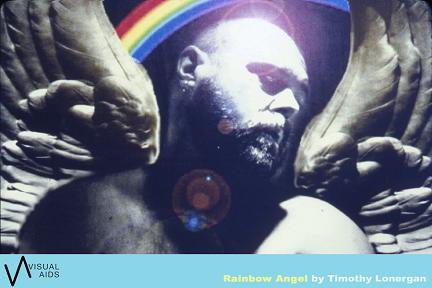
Postcards From the Edge is a show and sale of original, postcard-sized works on paper by established and emerging artists. Famous in the art world as the most exciting and affordable way to build a collection of work by internationally renowned artists as well as young and emerging artists, all works are sold on a first-come, first-served basis. The works are signed on the back and exhibited so the artists' signatures cannot be seen. While buyers have a list of participating artists, they don't know who created which piece until purchased. A collector might end up with a work by a famous artist or someone they don't know yet. Either way, they walk away with a great piece of art while supporting the important work of Visual AIDS.

Artists
If you would like to participate in the Postcards From the Edge benefit click here for details and submission forms. Deadline for donated works is Friday, November 10, 2006.
Collectors
If you would like to be on our mailing list, please send your address to info@visualAIDS.org or Visual AIDS, 526 West 26th Street #510, New York, NY 10001.

This Year, as usual an awsome NY gallery is the hosting the event.

Visitor from Detroit


Seems like we had a visitor from Detroit, a few weeks ago and she left behind a nice little post on the current Mattress Factory show. A ways back she also did a nice post on one of our downtown gallery crawls. Judging by her great blog, Detroit seems to have a scrappy scene run by some folks who won't say die. Her post of course, mentions Pittsburgh's not so slight resemblence to San Francisco; which a lot of people here don't seem to see.

Small Press Hotspot


Here's a great little piece on the thriving small press and underground literary scene in Pittsburgh. The writer, Karen Lillis; though a recent transplant has gotten her finger on a lot of stuff.

Calling the Pittsburgh literary landscape “the most underrated art scene in town,” Paper Street Press poetry editor, Arlan Hess, described this year’s book fair of the Association of Writers and Writing Programs in Austin, Texas: “There were 450 tables of small presses from all over; we were in about the eighth row. By the time people got to us, they were all exclaiming, ‘we had no idea Pittsburgh had so much going on!’ There was at least one press from Pittsburgh in every row.”

Tuesday, October 10, 2006

Interview With An Art Teacher: Introduction

An incident a few weeks ago in Texas helped to remind me that I now live in the "fly over country" that people on the coast's look down on. To a degree, this is just a comfortable stereo type, but like a lot of those things, there is often a grain of truth beneath it all. My gallery has the work of a number of artist's who work as suburban school teachers or professors in small colleges. Merge has an interview with one that reveals a lot of the issues they face as artist's and educators at work in flyover land.

Interview with an Art Teacher. By Merge Divide

Living in Pittsburgh, and trying to continue doing artwork can be a tricky proposition. On one hand, you have the advantage of a very low cost of living. Conceivably you can work part time in the service industry, or do another kind of piecework, and be able to meet some basic costs... while continuing to do the work that sustains you. That can work for awhile, but as you get older and start to make more commitments, you may be drawn to a lifestyle that requires more in the way of financial reources. So what do you do when you need health insurance and a retirement account? For many, the idea of teaching art becomes an attractive proposition. Today I decided to talk to a friend who has successfully explored that option, and present that conversation in interview form. For reasons that may or may not become evident, we have decided to protect his identity. He will be assuming the initials "cv" for this purpose.


MD: You gotta bear wiith me here, c, this is as new to me as it is to you. Why don't we start out with the artwork you do... what medium do you work in, and how was your involvement in the arts developed?

CV: I'll begin with how I got started painting, which was with my mom at a young age. She did the whole art school thing in the late 60's and failed at making any attempt in the money department post graduation, so became a stay at home mom until I was about 10 when she began selling real estate. She inspired in me to work in watercolor which is one of my prefered method of color applications. I told you about my mom because when I began drawing skulls and was into the whole skateboard culture of my early teens she decided to "squash every artistic bone in my body" (she told me this in a heart to heart shortly after I graduated from college). Well as with most efforts to dissuade a persons thinking in using negative influences it failed miserably for her and I was a sort of terror to her during my adolescence, getting tattooed at 16 and still drawing lots of dark angry stuff.
Sorry for the tirade there, I suppose its a bit of a sore spot still.... anyhow I like working with portraits of people not necessarily idealized as the "a-typical artists model" , homeless people, homo-erotic, beer can cowboys, modern religious mystics, etc..

MD: So you went ahead anyway and got a formal arts education?

CV:Actually, I got a degree in Environmental studies/Eco-psychology due to meeting influental people on a student exchange in N. California, namely Judi Bari who was one of the main anti-old growth logging organizers of the 21st century. But thats a whole other bag. After I was working mostly with troubled teens in alternative to jail programs and group homes for about 5 years after college I decided to go back to school for art education. I origally went to I.U.P for art education, but fucking hated Indiana, hence student exchange in N. cali and change of directions. I did a post bachelorate program at Carlow College here in Pittsburgh to get certified in Art Ed.

MD: That's a fairly radical transition- from eco-politics to arts education. Did you reach some defining moment when you realized you'd try to be an arts teacher? What specifically inspired that decision?

CV: Dana, my friend and partner in a wilderness trip for at risk teens and I did a project where we took Eric Drooker images that had to do with environmental and social degredation and presented them to the kids and had them talk about what they meant and how they made them feel. It was actually pretty amazing the responses and life experiences these mostly city kids had with these images and also with scenes from their own lives. I guess I always sort of had idealistic visions of my perfect job and it had to do with art and teaching and kids. Am I now living this as an arts educator in public schools.... ? Absolutely not. Beauracracy is slippery little worm that likes to weasel its way into nice ripe fruit.

MD: Is that a simile or a metaphor? I like it. So let's get into the nitty gritty then. It's obviously not what you thought it would be. Can you narrow whatever your dissatisfaction is into a few points?

CV: Metaphor. Due to the basic assumption that school is meant to be broken down into conveinent little compartments (subjects) and organized systmatically (40 minute periods) it is a challenge to say the least to incorporate a deeper meaningful experience while shuffling the student body as a whole down the conveyor belt of assimilation. Basically, its really hard to gain any sort of balance while seeing 600+ children a week. I teach elementary art so alot of my time is eaten up preparing examples and assisting students who are having trouble, re-introducing the lessons, and re-teaching steps involved in the making of whatever project it is we're working on. Now I teach in two schools, one has 5 minutes of prep time between specials (art/gym/music) the other has 0, thats right zero. Once one class is over, the next class is waiting lined up in the hall and shuffles in without a chance for me to breath. This creates a very hectic situation and I'm currently trying to "slow things down" , but the nature of the child is that they are sponges and work very fast/ pick up new ideas and so I also am trying not to stifle this beginners knowledge enthusiasm. On top of this the leadership of some administrators is lacking thereof. Meaning that they don't like their job or their life or both and basically are not such a supportive rung in the heirarchical ladder of leadership. Also, public education is becoming more and more of a hoop to jump through with teachers needing to be more educated (which I support as long as theres tuition reimbursement from the schools) and national standarized testing which soon art too will have to participate in if they have their way (which I do not support).

MD: Hold on there... do you really anticipate nation or statewide standards for arts education? I kinda think that they won't be able to find the funds to even develop them. But if they did... what would be the process? Who would be writing those standards, and how would they be assessed? The very subjectivity in the nature of art would seem to prohibit it, don't you think?

CV: Not really, I think its too open ended as a subject, but I've heard that to authenticate the art education experience they would be justified to incorporate art related vocabulary and history as part of the test for "art". Now standarized tests are primarily coming out of Princeton where they supposedly have hand picked "top" educators from diverse backgrounds, but in reality these tests are classist in therir scope from the terminology and wording of the very questions that they build these tests upon. It is proven that students score exeptionally higher after taking test prep classes which in most situations clue the students in on the thinking put in the the questions at hand and the answers they are looking for. Many of the questions are worded in a way that multiple answers could be right, but one is extra right. Or terminology that students from the suburbs or countryside might understand, but city dwelling ones would get thrown for a loop just in the vocabulary used within the context of the question. Its all about trickery and learning "their" way of thinking, which is a bunch of classist bullshit. And yes, MD, the subjectivity of art is lost when you try to pin it down in a bunch of historical facts and personalized ideas. History is written by the ones who win the wars, whether it be in the arts realm or weaponry. What would a history book look like if Native Americans had a say in our "heroes of the past" or look at the times of Van Gogh, he wasn't "realized" until long after his death.

MD: That is horrifying. It completely contradicts the purposes of art. The idea works counter to the history of the development of art. And there is a tie-in too, with the accepted structure and paradigms that seem to be pushed in MFA programs... that's bad enough, but now it's gonna be integrated into arts education for children? Talk about stifling possibility.

CV: And Bingo was his name-o... From my perspective as an art educator dealing with young children it is my sole responsibilty to make that 40 minutes some of the most exciting moments they will experience in the school setting. I'm constantly preoccupied with working out how to inspire atounding creativity and personal decision making/critical thinking within my classes. I want them to follow directions, but also I encourage twists to my lesson plans and their own influx of ideas into whatever we are doing. Thats fine that you followed directions, but how is it YOURS. I want all the projects to look different and I constantly tell them that if adults could recapture the magic of childhood they would, but we rarely can and therefore there is a reason kid art looks like kid art and when adults try to capture that whether its Basquiat or our own Kellstadt their is something magical within it. Something we automatically gravitate towards and want to try to interpret.
I am lucky in the fact that for the most part administrators leave me alone because kids like my classes and we produce good looking art.

MD: Being involved in education, but not arts education... I have always had this idealized vision of the arts teaching position. Those guys always seem to be chillin' in their own private neverland. At least in the high school, art is an elective course. The kids in that room chose to be there. And so they seem much more in their own element. And the art teacher is there with, like, Joy Division quietly streaming through their computer speakers. And they get to come to school in casual wear. Ya know, administrators don't have a freakin' clue what "art is". Generally (I would assume), they'd be keeping their paws off of your instruction. Of course that is what makes the whole "standards debacle" so problematic. The idea that we've come so far in that dirtection is scary. Anyway... I have another question I'm curious about. How does having the position you have in a particular community affect the decisions you make in displaying your personal art? What kind of considerations predominate?

CV: Well... Alot of sexually oriented or graphically dark artwork I've been straying away from not because I don't want to make it, but because I don't want to be associated with it in this small community. For the most part I make whatever I want and am not too concerned with having shows and so forth, so some may say i'm not much of a "real" artist. I don't really feel like I need to make art for any other reason than that I want to frickin' make something, whatever that may be. As an adult (shudder) I feel as though I have to watch my back and not get fired for something avoidable, ie. I wear long sleeves to cover my tats and don't really clue anyone in at work when I may show artwork or have something else going on. I'd like to keep my professional and personal life seperate, but in Pittsburgh is hard. I'm running into kids I teach more and more, but I suppose the kids I may run into at such functions would have pretty cool parents, and maybe not...

MD: Well... not to end the interview on an ominous note, but I read recently about an art teacher who was fired because she posed top-less for a fine art photographer. Of course the administration said she was let go "for performance reasons". Yeah, yeah... you and I know that's not the case. Anyways, thanks for taking the time to do this with me, and maybe we'll continue this conversations some other time.

CV: A real pleasure my friend. Thanks.
Carolyn Wenning - Hatfield


Sorry for being late in Posting this photo project from last Month.

On August 19, our good friend Carolyn Wenning spent the day catching the flavor of Hatfield Street. The result is Hatfield, a documentation project.

Sunday, October 08, 2006

October Unblurred

First Fridays on Penn Avenue are starting to be an energising art event. New venues have opened since last year and some businesses are offering their space to artists for display. One of the dual use businesses is Carolyn Wenning's (c)space. The building is her studio, so during the month the space used for presentation during Unblurred reverts to a workspace. Light and open, it is ideal for both purposes.

(c)space


(c)space had a strong show: DIAGRAMS, MOCK-UPS AND MAPPINGS. I have been trying something different with my camera: shooting the labels for the pieces to record the name of the artist and the title of the work. Unfortunately, things did not work out for the image on top; all I can make out is Nicholas and Untitled Series for the title. The series were figures drawn on graph paper and framed with distressed metal. At bottom was a mixed medium piece by Adam Walsh.
Modern Formations
Modern Formations had Introspections: The Artwork of Taya Hanauer. Modern Formations is a smallish space, with two rooms connected by a narrow hallway. I don't often think about the space that a show is in unless it has some bearing on the work. In this case, it is pertinent. The two rooms and the hall were hung with work. The front room had about a dozen framed drawings. The work was intuitive, but figure-based. Along the top of the wall leading into the hall were roughly drawn, illustrative figures, reminiscent of some comic book art. The figures were repeated in the hall but as digital prints and drawings on wood. The back room of the gallery is painted a dark eggplant. Here, the comic book character came out and really played in several mediums. Large-scale stencils, drawings on paper and wood and some evocative digital images. I had hoped to find more of the artist's work online, but she doesn't seem to have a website.

Imagebox
Imagebox is another venue that doubles as a full time business and presenter. This month, the work on exhibit was Charles Smith III's Autumn Abstract. The colors were rich and vibrant, much like the palette he prefers in the works presented on his website. It could be that this exhibit is a new direction for Mr. Smith since they are a radical departure from the figurative work for which he is known. The above image is one of the smallest in the exhibit and seemed to me to be the most interesting.

Garfield Artworks
The mob scene at Garfield Artworks was overwhelming. Tons of people dropped in for the show. Or maybe they were all there at the same time as me!

Garfield Artworks presented the work of five artists in the City of Monsters. The works were as crowded on the walls as the patrons were on the floor. Not a lot of breathing room for such active work.comic art seemed to be a theme here as well as at Modern Formations. There was an illustrative quality to the work. Pictured at top is one of Ben Kehoe's paintings. At bottom, one of Joe Bruce's works on paper. Bruce's work, though still informed by the aesthetics of comic book artistry, seemed to reach beyond the rather limited visual appeal to something that was of greater complexity.

Most Wanted Fine Art


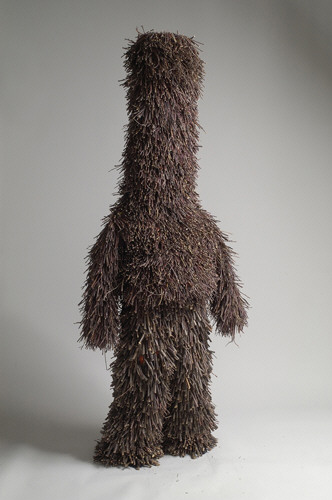
Most Wanted Fine Art is not quite ready to open its doors, so they had a sidewalk show featuring Jason Sauer, Gene Fenton and quite a few others. Walking up Penn Avenue from Garfielsd Artworks, I was pleased to see art set up on the sidewalk. And even more pleased to run itno Gene, that maker of dinosaurs.

From MWFA's mission statement...

Most Wanted Fine Art is dedicated to being a growing forum for the advancement of underground fine art and music in Pittsburgh. In conjunction with J&J Sauer Trailer Sales, Most Wanted makes its art mobile and publicly available by displaying it at various local sites in a utility trailer (also for sale via J&J Sauer). Most Wanted operates on a loose philosophy of artistic socialism; while each artist promotes his own work, it is for the goal of the group's success as well as the individual's. By booking shows for our artists and musicians, Most Wanted is serious about helping each member of our team achieve success while simultaneously enriching the local (and eventually national) art and music scenes by giving below-the-radar artists a platform and a voice.

I have to say that if you only have a limited time to get into Pittsburgh to view art, first Friday's Unblurred event in the Penn Avenue corridor is worth working your schedule around. It is the only time when some of the veneues are open to the public or are open at the same time. Really, it was difficult to get to everything, there are a lot of gaps in what I got to see on Friday. I never made it to 5151 or the Pittsburgh Galss Center, which from what I hear had good shows, too.

This was a far cry from the disappointment at the Downtown Gallery Crawl the week before. Penn Avenue really is reflecting the diversity of the Pittsburgh visual arts scene. If you want to find out more about the district, check out the PAAI site. I'll be going every month. How about you?

Saturday, October 07, 2006

Downtown Gallery Crawl - part 3


There's a really fine show at the Three Rivers Arts Festival Gallery

IN OUR HOUSE
Curated by Marica Jackson

Dates: September 8, 2006 - October 21, 2006
Opening Reception: September 8, 5:30-7:30pm

IN OUR HOUSE promises to uphold the high standard set by Women of Visions’ summer exhibition at the Pittsburgh Center for the Arts, Migrations of the African Diaspora. While Migrations focused on the nature of the journey, this exhibition will delve into aspects of the African American experience that reflect “settling in” to establish a distinctive presence.
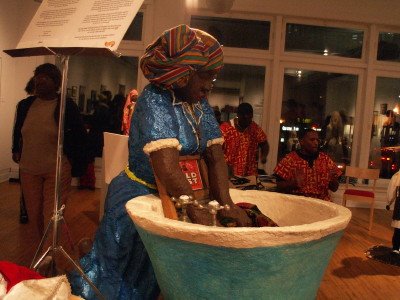
I stopped by during my gallery walkabout and snapped a couple pictures of my favorite pieces. Pictured above left is Emory Biko's MOM (More dependable than Maytag) and above right is
Monique Luck's Fabulous Friday Hair. I need to take better pictures. You really lose any sense of how special Monique's work is in this image. Follow the link for much better images.

Friday, October 06, 2006

Tramp Art

In an earlier post, I outlined the difference between a "hobo" and a "tramp". Hoboes traveled around the country to find transient work, while tramps considered hoboes "suckers" for working at all. Tramps had their own hierarchy, with the "profesh" at the top (a professional tramp, who was known for his fastidousness of appearance), and the more typical "fakir" (who had repairman or trade skills to employ when needed). Tramps did whatever they could to survive. They engaged in thievery and begging, and more rarely in robbery and murder. Sometimes they resorted to hobo status in order to build a "stake" to live off of for a short time.

This is not to say that tramps never gave anything back to the society in which they lived (or more properly- lived outside of). In the "jungles" (campsites) where they lived, they often used a technique called "chip carving" to craft a variety of objects including doll furniture, picture frames, jewelry boxes, and even full-sized chests of drawers. Chip-carving entailed using knives to make triangular-shaped cuts to form intriguing and intricate designs. Tramps used cigar boxes and packing crates to produce these items, and traded them for food, lodging and other necessities on the road. The finished pieces are known today under the classification "tramp art".

This folk art had its heyday between the 1870's and 1940's. Ironically, it only drew notice in the realm of culture during the 1950's when its period of production had largely passed. Nowadays, in the postmodern era of cultural consumerism, tramp art has become a highly collectible commodity. Of course, there are galleries devoted to this traditional folk-style Americana. What confounds collectors of such work is that most of it was left unsigned and undated. Good luck doing an internet search for the names of "famous tramp artists"- it's very difficult to find specific names. Bill Carmichael (information on this author provided at bottom of post) mentions Big Boy Billy, Frisco Fred (who gets a mention here), and Lanky Larry.

When most talk about "tramp art" today, they are likely referring specifically to the chip-carved pieces linked to above. But indeed there is a whole range of craft that is associated with both tramps AND hoboes (furthering the confusion of classification). Check out this confusingly- titled link. Evidently some make a distinction between hobo art and tramp art, saying that the latter is more utilitarian in nature, while the former used whittling to create objects that were more whimsical.

(By the way, I particularly like this vintage religious tramp art.)


** I became aware of this fascinating type of artisans' craft when I came across a chapter devoted to its collectors in a (1971) book by Bill Carmichael called "Incredible Collectors, Weird Antiques and Odd Hobbies". Carmichael seemed to be well ahead of the curve in recognizing the validity and future colllectibility of tramp art. But it's inclusion in this book of "strange collections" is illustrative of just how under-the-radar the artform was until recently.
October Resident at the Society for Cultural Exchange


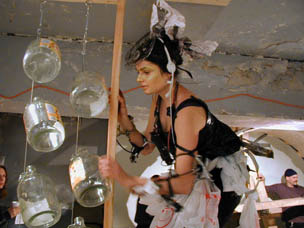
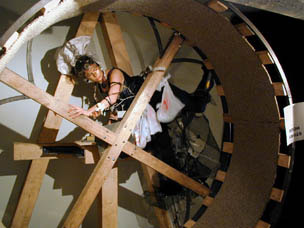
Here's a little about the October Artist in Residence at The Society For Cultural Exchange, both the images and the statement is from thier Website.

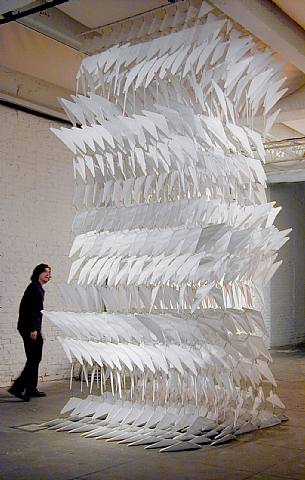
"Salvage/Salvation* is an installation and performance project that explores the metaphysics of re-use and the philosophical, emotional and material implications of discard. The project is made for spaces that are between uses or slated for demolition, and appropriate outdoor sites. A group of visual and performing artists create independent but overlapping environments and performances grouped loosely around a central theme. The site itself, the surrounding community and any discarded materials found on-site inspire the exact character of the event. Through its methodology and the striking nature of the final environments, Salvage/Salvation seeks to bring ideas of scavenging and transformation to center stage and create a dialogue with the public about sustainable relationships to our physical environment, advocating ingenuity and unity. Salvage/Salvation uses installation and performance as a laboratory for both artists and audience. It is a primarily urban project that began in New York City. A group of artistic collaborators and outside consultants seek out unused spaces, and create installations and performances that are appropriate to the space and its surrounding locale, taking into account the local neighborhood, the city itself, and local industries. Each group begins with the same hypothesis, but the conclusions (the pieces) are determined through the research process and the specific parameters of the circumstances at hand. The groups works together to create a unified esthetic through the juxtaposition of independent voices.Since 2002, Salvage/Salvation has had four very different iterations; in a gallery reclaimed from a garage in Queens, NYC, (HOME) in a storefront slated for demolition in Times Square, NYC (Living Salvation) and twice at the Queens Botanical Garden (NEST and HIVE). The themes varied with each space—some examples: In Living Salvation the artists contemplated the questions: What is our relationship to our own past, and how do we discard or transform trauma and sorrow in our selves as well as in our physical environment? In NEST, the artists took the gathering practices of birds as their inspiration, and used only materials found on-site at the Botanical Garden to create a series of temporary homes.For Salvage/Salvation Part 5, tentatively titled Pittsburgh Home, I will seek out a residence (house, apartment building, etc.) that is currently not in use, preferably abandoned for several years. Abandoned or unused structures give the sense of architecture finally relaxing into dust and dirt and complex edges, and contain all the ghosts of history in their rooms, clamoring for our attention. What is normally left behind and ignored will be used to create a new reality, as each room in the house is re-built, the palpable past contained in the structure becoming a stage set for an unknown narrative. "

Stay tuned for more on this

Thursday, October 05, 2006

brillo burlesque


Thanks to Renee Ruth Ickes at brillobox for coming up with this really cool idea for us Pittsburgh artists. If you want to get updates about future sessions, email us and we'll put you on the email list.

Brillo Burlesque draws inspiration from the vaudeville queens and their outrageous costumes for this unique artist opportunity. Brillo Burlesque will offer two models, clothed in feathers and satin and lace; a study in sensuous textures.

The models will be costumed and some props will be available for the sessions. One model will be dedicated to a single pose while the other will concentrate on a variety of poses. The sessions are uninstructed, drop-in sessions. The brillobox artists must bring their own materials. Water-based and dry mediums are welcome. (Sorry, no photography or oil-based mediums)

burlesquebrillo@yahoo.com
www.myspace.com/brilloboxevents

Saturday, October 14: 5-8PM
brillobox
4104 Penn Ave.
Pittsburgh PA 15224
(412) 621-4900
Two models!
Cost: $15

The world's going to hell

Just look at this outrage.

Wednesday, October 04, 2006

Black Sheep Puppet Festival


This is just a heads up that we are in the Black Sheep Puppet Season, thanks to people like Tom Sarver. This is one of the last approved events before the Stillers high holidays and seems to becoming better each year. Events will be going on throughout the month.

This month, The Brew House in the South Side will be hosting the Black Sheep Puppet Festival for the eighth year. The festival “is an international showcase of contemporary innovations in puppetry as an art form and performance medium,“ according to its website, www.blacksheeppuppet.com.
Once again, puppeteers and artists from all over the U.S. and Canada will return for a month-long festival promoting puppetry in its modern form. While the resources are paltry and the puppets are not extremely high-tech, sincere passion for puppetry has been clearly displayed at the past seven festivals. Many of the artists return year after year with new projects and creations to show off.
Pittsburgh native Tom Sarver, this year’s curator and the one who has been integral to the festival since its inception, is currently opening a museum called the Tom Museum in conjunction with the Mattress Factory. As part of this festival, he will be conducting a make-your-own-puppet day at the Mattress Factory, during which workshops will be held for introductory puppet-making.
The festival started in 1999. A group of artists that worked in The Brew House at the time wanted to bring something new and different to The Brew House — something that displays the cutting edge, experimental forms of puppet,” Sarver said. “I was in school in Philadelphia studying painting, had just started doing puppet shows, and happened to run into the people doing the festival. Getting involved in the puppet festival helped me get more into it and keep up with it as an art form. It was really inspiring for me.”

Downtown Gallery Crawl - part 2

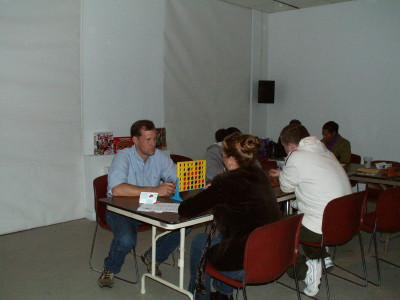
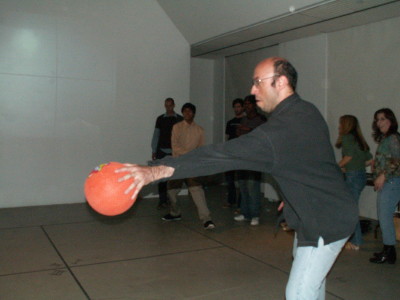
Peter Kope and Michele de la Reza from Attack Theater brought Game Night to the Wood Street Gallery for the gallery crawl. This is a popoular program for Unblurred, first Fridays on Penn Avenue. During Unblurred, though, the company members also perform the Seven Minute Dance Series. It's a great way to get to know the company's works and get a sneak preview of upcoming works. They'll be performing October 6 for Unblurred. And yes, there will be games.


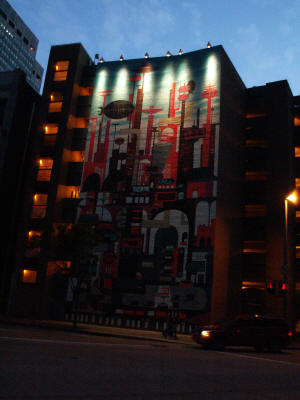
The Sprout Fund began sponsoring murals in the various Pittsburgh neighborhoods in 2003, with thirty murals completed to date. It's a great opportunity for young artists to get their feet wet in the public art arena. While I was downtown for the gallery crawl, I swung by and snapped a picture of the second mural for the area. Brian Holderman was hanging out with some friends across from the mural. Now, I don't understand why the dedication ceremony didn't take place during the gallery crawl, but there you go. The dedication ceremony is taking place Friday, September 29th, 6:00pm at 7th & Liberty Avenue.

I think that this fall's gallery crawl was disappointing. Merge Divide wrote eloquently about it in Serendipity. There were a lot of performance-oriented programs for an event that is supposed to showcase visual arts. The video exhibit at Space was unviewable because of the band. While the band seemed to be pretty good, I found that the music echoed so much from the walls that I couldn't make out the lyrics.
Wood Street Gallery had dance events instead of visual arts. Even the Three Rivers Arts Festival Gallery got into the act with a drum performance. (I'll post about the exhibit later)
What happened? Did everybody just ignore the calendar? Are they so concerned with bringing in masses of people that they've resorted to bread-and-circuses to make a greater number impact?

Tuesday, October 03, 2006

Merge on the Downtown Gallery Crawl

Merge had some thoughts about last Friday's gallery crawl. I myself feel in general agreement, but the truth is that I missed too many shows to have a complete opinion. I found myself very enthrawled by two interesting works at Future Tennant; one by file artist Josh Tonies.

Here's Merge on his blog. Please return to my blog though cause i sent you over there and it is just low down and impolite to leave me all alone.

Monday, October 02, 2006

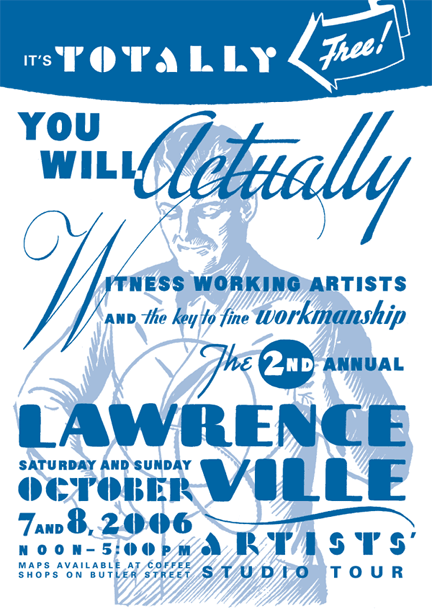
Lawrenceville Artists' Studio Tour

The Second Annual Lawrenceville Artists' Studio Tour

Join this free, self-guided tour of 22 Lawrenceville artists’ studios on Saturday, October 7 and Sunday, October 8 from Noon to 5 p.m. Participating artists are independent local artists who work in a range of different media, including sculpture, painting, candlemaking, weaving, metalsmithing, photography, soapmaking, t-shirt and handbag design, custom furniture making, stained glass, and textile and jewelry design.

Maps will be available at Lawrenceville coffee shops the days of this event

Featuring the work of:
Mary Coleman, Weaving, 187 43rd St.
Ron Donoughe, Painting, 208 Main St.
Jones Furniture Designs, Custom Furniture, 5136 Butler St.
Prism Stained Glass, Stained Glass, 5234 Butler St.
Digging Pitt Gallery, Art Gallery, 4417-4419 Butler St.
Everyone An Artist, Outsider Art, 4128 Butler St.
Trinity Gallery, B&W Photography, 4747 Hatfield St.
Alexandra Etschmaier, Sculpture, 218 39th St.
Allison S. Hoge, Painting, 5314 Butler St.
Picturesque Photography & Gifts, Photography, 4300 Butler St.
Good Chemistry, T-Shirt & Handbag Design, 4728 Plummer St.
Margaret Meinzer, Painting/Metalsmith, 179 431/2 St.
Allison Meredith, Painting/Sculpture, 5136 Butler St.
Jay Design Soaps & Gifts, Soapmaking, 4603 Butler St.
Of This Earth, Candlemaking, 4021 Butler St.
Christopher O'connell, Painting, 5136 Butler St.
Gerald's Forge, Artistic Metalwork, 5160 Butler St.
Corey LeChat, Photography, 4401 Butler St., 3fl
Mark Mentzer, Prints, Drawing, Painting, 5229 Butler St.
Kate Morrison & Teresa Lin, Textile & Jewelry Design 5304 Butler St.
Fe Gallery, Non-Profit Contemporary Art Space, 4102 Butler St.
Blackbird Artist Studios, Various Artists, 3583 Butler St.

Sunday, October 01, 2006

Downtown Gallery Crawl

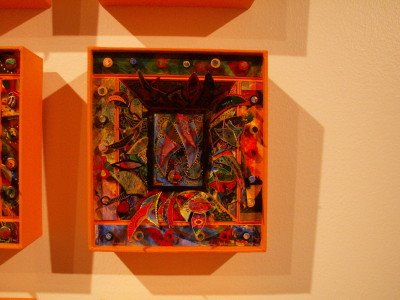
I met a friend for the Pittsburgh Downtown Gallery Crawl on Friday night. This is a quarterly event sponsored by the Pittsburgh Cultural Trust. The night's events are listed on their website. The first place the we stopped was at the August Wilson Center for African American Culture Gallery to see Women of Vision's Celebration of Visual Traditions exhibit. The space is broken into a series of alcoves and small rooms. Perfect for a group show like this. It gives each work space without it having to compete with each other. The image above is Bullock's Mother and Child; Journey Series . This one of several fine collages that were presented at the exhibits on Friday. The figure in this piece is about life-sized, which really contributes to its impact. Really, you have to go and see the piece to get a better idea of the intricate collage. At the same show in the lower level was a series of boxes created by Martina Johnson Allen. The piece, titled Sacred Space, is made up of nine small boxes (below left). There is an interesting, lively feel to the work. Color seems to burst out along with the bits and pieces. I think that for me, the best piece in the exhibit was RL Washington's Just Having Church. My friend and I spent some time looking at this piece and coming up with several narratives to reflect the characters. There is quite a bit more, so sty-tuned. I'll be uploading pictures and info about the other shows and happenings later.

Saturday, September 30, 2006

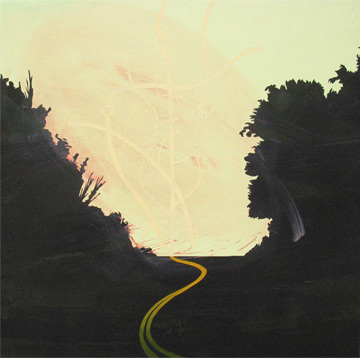
Adam Grossi: The Suburban Excavation Project


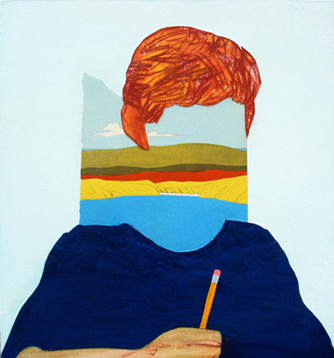
Digging Pitt Gallery encourages you to take a peek at Adam Grossi's exhibit at GRACE. Adam is included in our flat files and, along with Josh Tonies, produced a fabulous showcase of collaborative works.

Adam Grossi: The Suburban Excavation Project
September 28 — October 29, 2006
Greater Reston Arts Center Gallery
12001 Market Street, Suite 103
Reston, VA 20190

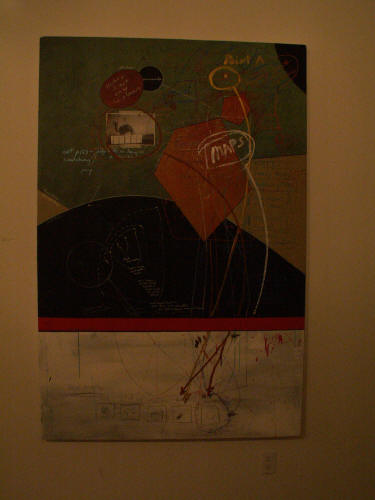
Adam Grossi begins his work at the intersection of utopian ideals and the American cultural mainstream. Drawing from architecture, advertisements, maps, and illustrations the artist uses paint, collage, and installation to chronicle his travels within the middle class suburbs. A Reston native, Grossi has a long history growing up in a planned community which he develops into imaginary narratives he calls, "welcome mats at the doors to stranger's homes." From the GRACE Website

"This is a solo show, nestled deep within the heart of my very own hometown -- a place that has often served as my primary source of image-making inspiration for about three years. Reston is one of the country’s first and foremost planned residential communities, making it kind of like the town in “The Truman Show,” except for the fact that no one is acting. It is a fascinating place; driven by utopian development ideals and intricate planning, and yet, also susceptible to the same mainstream cultural dilemmas that challenge the rest of the country’s suburban landscape. The paintings I am presenting here are products of my fascination with this tangled intersection of idealism and conventions. Roughly twenty images have made it into the show; additionally, the gallery staff has been generous enough to allow me to supplement my work with some painting and drawing directly on the walls… so I’ve created a temporary landscape of my own." Adam Grossi - Artist Statement